
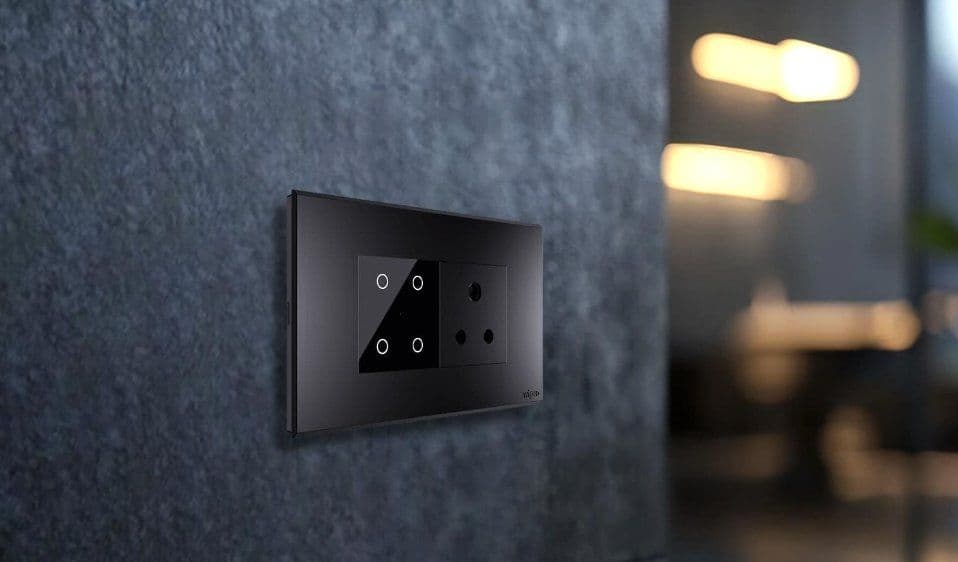
When planning a home, we often spend considerable time choosing furniture, flooring, wall colours and lighting. Switches, however, are usually considered much later in the process.
Yet, they are among the electrical products we use most often every day.
From switching on the lights in the morning to turning off appliances at night, switches are a small but essential part of everyday life. So, choosing the right modular switches is about more than just picking a colour or finish.
Here are six things to consider before making your choice.
1. Consider the Requirements of Each Room
Every room has different electrical requirements.
A bedroom may need controls for lights, fans and charging points, while a kitchen may require several sockets for appliances. A living room may need a combination of lighting controls, fan regulators and other electrical accessories.
Before finalising the switchboard, think about how the room will be used and what you are likely to need.
Consider:
- How many switches and sockets are required?
- Where will the furniture be placed?
- Which points will be used most frequently?
- Will you need additional points in the future?
Planning these requirements in advance can help create a more convenient and practical electrical layout.
2. Look Beyond the Appearance
The design of a switch matters, particularly because the switchboard remains visible on the wall. The right finish can complement the interiors and add to the overall look of a room.
However, appearance should not be the only consideration. When choosing modular switches, look at the product as a whole—its design, functionality, construction and safety features. A switch may look good, but it should also be suited to the way the space is used.
3. Think About Everyday Operation
Switches are used repeatedly throughout the day, often without a second thought. That makes ease of operation an important part of the selection process.
Consider the placement and arrangement of the switches, particularly in rooms where several controls are located together. The switchboard should be easy to understand and convenient to access for everyone using the space.
Good electrical planning is not only about the number of points available. It is also about making everyday use simple and convenient.
4. Keep Safety in Focus
Safety should always be an important consideration when selecting electrical products.
When comparing modular switches, look at the construction and safety features offered by the particular product range. Relevant certifications and standards can also provide useful information about the product.
Wipro North-West switch ranges are designed to meet applicable Indian standards, with the brand highlighting ISI compliance and RoHS certification across its switch offerings.
However, choosing the right product is only one part of electrical safety. Proper planning and installation by a qualified electrician are equally important.
5. Consider the Flexibility of a Modular System
One of the advantages of modular switches is the flexibility they provide when planning electrical points.
Different rooms may require different combinations of switches, sockets, fan regulators and other accessories. A modular system allows these requirements to be arranged according to the needs of each space.
For example, the configuration required for a bedroom may be very different from that of a kitchen or living room. It is therefore useful to finalise the electrical requirements before installation so that the switchboard configuration can be planned accordingly. In other words, the switchboard should be planned around the room and its requirements.
6. Choose a Design That Complements Your Space
Once the practical requirements have been considered, you can look at the design.
A switchboard is a visible part of the room, so its finish, colour and overall appearance can influence the look of your interiors. This is particularly relevant when the interiors have been carefully designed.
Wipro North-West offers different switch ranges and finishes to suit varied requirements and design preferences. The Artisa range, for instance, offers premium finishes including glass, metal, wood and coloured options.
The right choice is ultimately one that fits both the functional requirements of the room and the overall design of the space.
What Should You Check Before Buying?
Before choosing modular switches for your home, consider more than just the colour or finish.
Ask yourself:
- Does the switchboard suit the requirements of the room?
- Are the switches and sockets positioned conveniently?
- What safety and construction features does the product offer?
- Does the modular system provide enough flexibility?
- Does the design complement the interiors?
- Have the electrical points been planned before installation?
Considering these factors together can help you make a more informed decision and create an electrical setup that works well for your home.
Conclusion
Choosing a modular switch is not just about finding a design that looks good on the wall. It is about finding the right balance between everyday convenience, safety, flexibility and design. Start by understanding the electrical requirements of each room and how the space will be used. Then look at the construction, safety features, modular options and finishes available. A little planning before installation can make a noticeable difference to how easily your electrical setup works in everyday life. Because when it comes to something you use every day, the right switch should work well, look right and fit naturally into your home.
FAQs
What should I look for when buying modular switches?
Start by considering the electrical requirements of the room. You can then compare switches based on their construction, safety features, ease of operation, modular flexibility and design.
Are modular switches suitable for new homes?
Yes. Modular systems allow different combinations of switches, sockets and other electrical accessories to be arranged according to the requirements of different rooms.
Should every room have the same switchboard configuration?
Not necessarily. Different rooms have different requirements. A kitchen, bedroom and living room may each need a different combination of switches and electrical accessories.
Is the design of a modular switch important?
Yes. Switchboards are visible elements of a room, so their design and finish can complement the overall interiors. However, design should be considered alongside functionality and safety.
How do I choose the right modular switch for my home?
Begin by understanding how each room will be used and what electrical points it requires. Then consider safety, construction, everyday operation, modular flexibility and design before making your final choice.
Final Thought
A modular switch may be a small part of your home, but it is something you interact with every day.
So, instead of looking only at how a switch looks, consider how well it fits the way your home is used.
Because the right switch is not just about the finish on the wall—it is about bringing together functionality, safety, flexibility and design.