
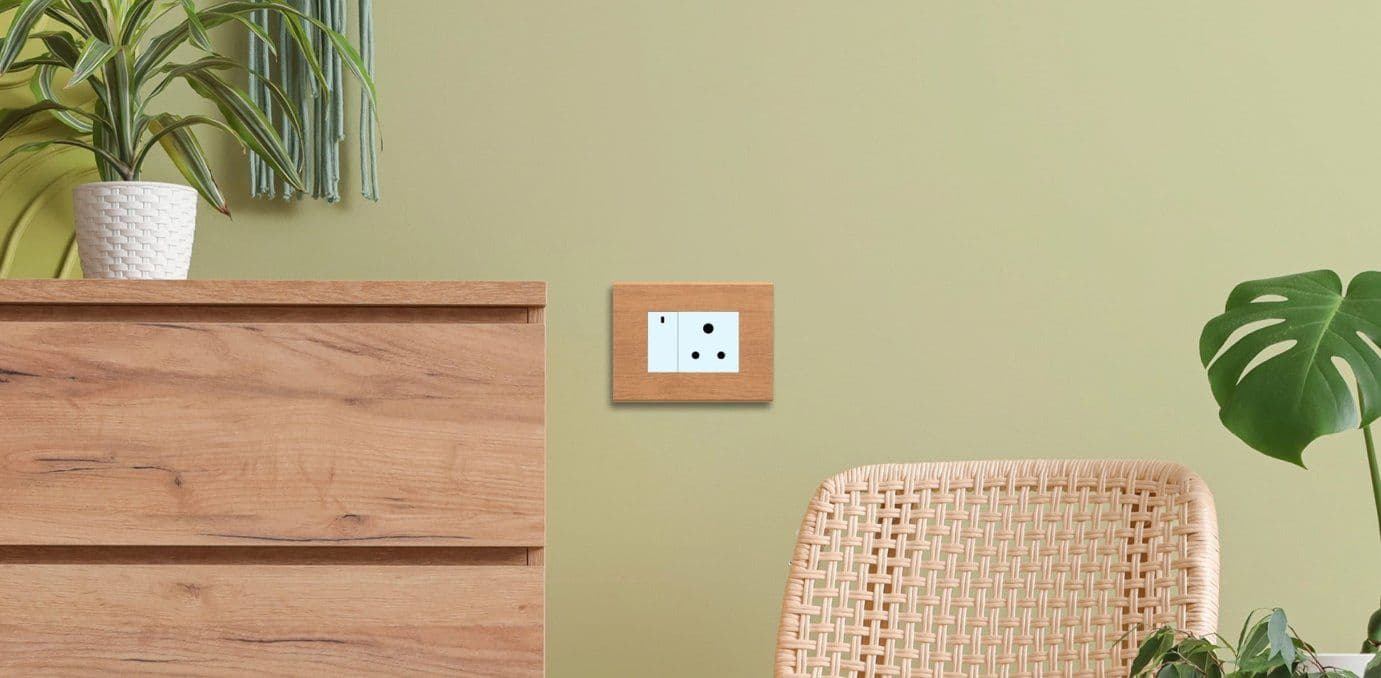
Electrical switches are among the most frequently touched surfaces in any home. From switching on bedroom lights in the morning to operating kitchen appliances throughout the day, we interact with them regularly, often without thinking about how clean they are.
As homeowners become more conscious of household hygiene, there is growing interest in products designed with antibacterial properties. This has brought antibacterial switches into the conversation around modern home interiors and electrical accessories.
But are antibacterial switches genuinely worth considering? How do they work, what benefits can they offer, and are they necessary for every household? Understanding the technology, its limitations and the available product options can help homeowners make informed decisions when choosing electrical switches for Indian homes.
What Are Antibacterial Switches?
Antibacterial switches are electrical switches designed with materials or surface treatments intended to inhibit the growth or activity of certain bacteria.
Unlike conventional switches, which primarily focus on electrical performance, safety, durability and appearance, antibacterial switches incorporate an additional hygiene-related feature.
Depending on the technology, antibacterial properties may come from an antimicrobial agent incorporated into the switch material or a specially treated surface. However, the technology and its effectiveness can vary between products and manufacturers.
It is important to distinguish antibacterial properties from broader antimicrobial claims. A product designed to act against certain bacteria should not automatically be assumed to offer protection against viruses, fungi or every type of microorganism.
How Do Antibacterial Switches Work?
The working principle of an antibacterial switch depends on the material and technology used by its manufacturer.
Some products incorporate antimicrobial agents into their plastic components, while others use specially developed surface treatments. These technologies are designed to interfere with bacterial activity or limit bacterial growth when microorganisms come into contact with the treated surface.
However, not every antibacterial product works in the same way. The actual performance depends on the formulation, application method and conditions under which the product is used.
This is why supporting test reports are important. A reliable manufacturer should be able to explain the technology, identify the bacteria tested and provide details of the testing method and results.
For example, ISO 7581:2023 provides a method for evaluating the bactericidal activity of non-porous antimicrobial surfaces in dry environments. It is important to remember that this type of testing evaluates surface activity; it does not establish that a product can clean or disinfect itself.
Antibacterial Switches vs Regular Switches: What Is the Difference?
The main difference between antibacterial and conventional electrical switches is the additional surface-related functionality claimed by the manufacturer.
A regular switch is designed to provide reliable electrical operation, safety and durability. Its surface can be maintained through appropriate cleaning, but it is not necessarily designed to inhibit bacterial activity.
An antibacterial switch is intended to offer an additional feature through a specific material or surface treatment.
However, this does not mean conventional switches are inherently unhygienic or that antibacterial switches eliminate the need for regular cleaning. Both types require suitable maintenance.
When comparing products, homeowners should also consider build quality, switching performance, material durability, design and electrical safety. An additional feature should complement these essential requirements rather than replace them.
Are Antibacterial Switches Worth Considering?
Antibacterial switches may be worth considering for homeowners looking for additional hygiene-related features in frequently used areas.
Switches in kitchens, shared living spaces and bedrooms receive repeated hand contact throughout the day. An appropriately tested antibacterial surface may offer an additional benefit in these environments.
However, expectations should remain realistic. Antibacterial properties do not make switches self-cleaning, guarantee that bacteria will not be transferred through contact or establish protection against infections.
There are also practical considerations, including the additional purchase cost, durability of the treatment and availability of independent testing.
For most households, regular cleaning and good hand hygiene remain essential. The US Centers for Disease Control and Prevention (CDC) recommends regularly cleaning frequently touched household surfaces, including light switches.
Therefore, antibacterial functionality is best viewed as an additional product feature rather than a replacement for everyday hygiene practices.
What Should Homeowners Check Before Buying Antibacterial Electrical Switches?
Choosing electrical switches involves more than selecting an attractive design or an additional feature. Before purchasing antibacterial electrical switches, homeowners should consider the following factors.
1. Verify the antibacterial claim
Look for clear information about the technology used and the manufacturer's supporting test reports. Check whether the claimed performance relates to the actual switch material or its surface treatment.
2. Check the testing method
Find out whether the product has been evaluated using a recognised testing method. Testing details should identify the microorganisms examined, the conditions and the reported results.
3. Consider durability
Ask whether the antibacterial properties are expected to remain effective during normal use. Repeated handling and cleaning may affect certain surface treatments, so the manufacturer's maintenance guidance is important.
4. Prioritise electrical safety
Antibacterial functionality should never take priority over electrical safety. Check the product's applicable standards, rated specifications, construction quality and suitability for the intended installation.
5. Understand maintenance requirements
Follow the manufacturer's cleaning instructions. Avoid harsh chemicals, excessive moisture and abrasive materials unless specifically permitted by the product documentation.
Wipro North-West Switches: What Should Homeowners Know?
Wipro North-West offers a portfolio of modular switches designed for different residential interiors and electrical requirements. Its listed switch ranges include Artisa, Celestia, Artisa Neo, Stylus+, Convex, Nowa and Venia.
These ranges offer different design approaches and switch configurations, allowing homeowners, architects and interior designers to consider options according to their project requirements.
The Nowa range, for example, features contemporary styling and is available in Matt Black, Silver Grey and White. Its portfolio includes switches, sockets, fan regulators, dimmers and other electrical accessories.
Wipro North-West's official website also includes a frequently asked question about whether its switches are antibacterial. However, the publicly accessible product information reviewed for this article does not provide sufficient technical details to confirm the antibacterial technology, testing results or current availability of a specific antibacterial switch configuration.
Homeowners interested in this feature should contact Wipro North-West or an authorised dealer to confirm the latest product specifications before purchasing.
You can explore the Wipro North-West range of modular switches to understand the available designs and configurations.
When selecting electrical accessories, it is always better to evaluate verified product features alongside safety, durability, functionality and suitability for the installation.
Conclusion
Antibacterial switches introduce an additional consideration when choosing electrical accessories for modern homes. Their potential value depends on the technology used, the supporting test results and the durability of the treated surface.
Homeowners should look beyond marketing claims and evaluate product documentation before making a purchase. Electrical safety, reliable performance, build quality and ease of maintenance should remain central to the decision.
With its range of modular switches and electrical accessories, Wipro North-West provides homeowners with different options for residential electrical requirements. Understanding the specifications of each product can help ensure that the final selection is appropriate for the space.
Frequently Asked Questions
1. What are antibacterial electrical switches?
Antibacterial electrical switches are designed with materials or surface treatments intended to inhibit the growth or activity of certain bacteria. Their effectiveness depends on the technology used and supporting test results.
2. Do antibacterial switches prevent infections?
No. Antibacterial switches should not be considered a method of preventing infections. They may offer an additional surface-related benefit, but they do not replace regular cleaning or good hand hygiene.
3. Are antibacterial switches better than regular switches?
Not necessarily. They may offer an additional feature, but electrical safety, durability, build quality and suitability for the installation remain essential considerations.
4. How should antibacterial switches be cleaned?
Follow the manufacturer's maintenance instructions. Use suitable cleaning methods and avoid abrasive materials or harsh chemicals that could damage the switch surface.
5. Does Wipro North-West offer antibacterial switches?
Wipro North-West's official website includes a frequently asked question about antibacterial switches. However, the publicly available technical information reviewed for this article does not sufficiently confirm the current availability or performance of a specific antibacterial switch range. Contact the brand or an authorised dealer for the latest details.
Final Thought
A well-planned home is built around thoughtful everyday choices. Even small details, such as the switches we use, deserve attention. When selecting electrical accessories, informed decisions based on verified features, reliable performance and practical requirements will always be more valuable than simply following a trend.